
Looking for a show-stopping centerpiece for your holiday table or next special dinner?
This Prime Rib with Garlic Herb Crust is rich, juicy, melt-in-your-mouth tender, and surprisingly easy to make. With its beautifully browned exterior, buttery garlic-herb coating, and perfectly rosy center, it’s the kind of roast that makes everyone at the table stop and stare.
Whether you’re planning Christmas dinner, a holiday feast, or a celebratory family meal, this prime rib delivers that “wow” factor every single time.
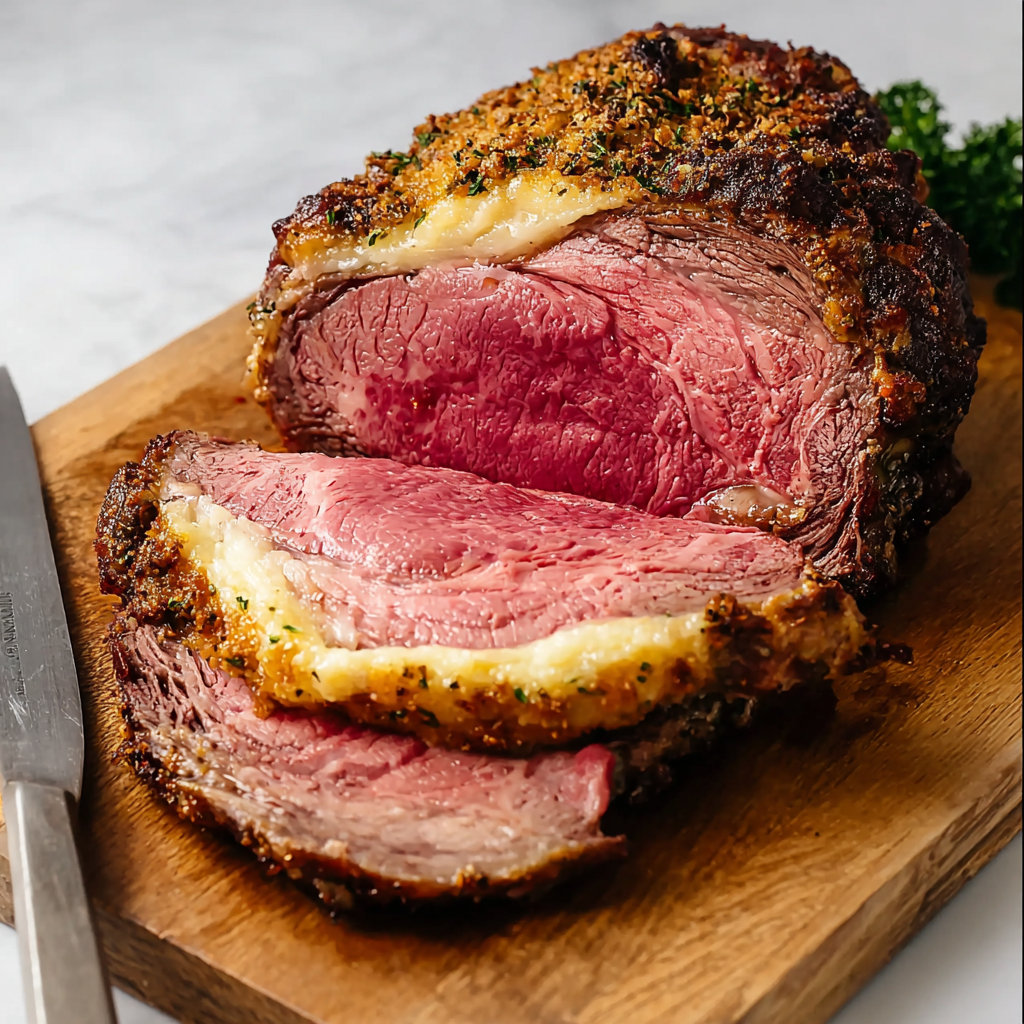
💛 Why You’ll Love This Prime Rib Recipe
- ✨ Elegant and impressive
- 🧄 Packed with garlic herb flavor
- 🥩 Tender, juicy, and perfectly cooked
- 🎄 Perfect for holidays and special occasions
- 🌟 Simple method with reliable results
🧾 Ingredients
For the prime rib:
- 6 pounds bone-in prime rib
- 1/2 cup softened butter
- 6 garlic cloves, minced
- 1 tbsp kosher salt
- 1 tsp fresh thyme, finely chopped
- 1 tsp fresh rosemary, finely chopped
- 1 tsp black pepper
- 1 medium yellow onion, quartered (optional, for au jus)
Optional red wine au jus:
- 1/4 cup pan drippings (fat removed)
- 2 cups beef broth
- 1 1/2 cups red wine
- Optional: 1 tbsp cornstarch or arrowroot slurry for thickening
👩🍳 How to Cook Prime Rib
1. Bring the Meat to Room Temperature
Take the prime rib out of the fridge 2 to 3 hours before cooking.
This is one of the most important steps. Bringing the roast to room temperature helps it cook more evenly, so you don’t end up with overcooked outer edges and an undercooked center.
2. Make the Garlic Herb Butter
Preheat your oven to 450°F (230°C).
In a small bowl, mix together the butter, garlic, kosher salt, thyme, rosemary, and black pepper until well combined.
3. Prep the Roast
Pat the prime rib dry with paper towels to remove excess moisture.
Rub the garlic herb butter all over the roast, coating it generously on every side.
Place the roast in an oven-safe pan or roasting tray with the bone side down and fat side up. If making au jus, scatter the onion pieces around the roast.
4. Roast the Prime Rib
Roast at 450°F (230°C) for 20 minutes to create a flavorful crust.
Then reduce the oven temperature to 325°F (160°C) and continue cooking until the roast reaches your preferred internal temperature.
For medium-rare, remove the roast when it reaches 120°F (50°C) internally.
5. Rest the Meat
Remove the prime rib from the oven and let it rest for 20 to 30 minutes.
You can loosely tent it with foil to keep it warm. Resting allows the juices to redistribute throughout the meat and helps prevent them from running out when sliced.
6. Slice and Serve
Cut away the strings and remove the bones if they were tied back on.
Slice the roast into thick slices and serve immediately with the optional red wine au jus.
🌡️ Prime Rib Internal Temperature Guide
Because of carryover cooking, the roast will continue to rise in temperature after it comes out of the oven. Plan for about 7 to 10 degrees of additional heat while resting.
- Rare: remove at 110°F
- Medium-rare: remove at 120°F
- Medium: remove at 130°F
- Medium-well: remove at 140°F
- Well done: remove at 150°F
For the juiciest and most tender result, medium-rare is the sweet spot for prime rib.
⏱️ How Long to Cook Prime Rib
A 6-pound prime rib usually takes about 1 hour 30 minutes total, but timing can vary depending on your oven and the shape of the roast.
A general estimate is 13 to 15 minutes per pound for medium-rare after the initial high-heat roast.
Use these as rough guides only:
- 4 to 5 pounds: 60 to 70 minutes
- 7 to 8 1/2 pounds: 1 1/2 to 1 3/4 hours
- 9 to 10 1/2 pounds: 1 3/4 to 2 1/4 hours
Always rely on a thermometer instead of time alone.
🥩 Bone-In or Boneless?
Both work, but bone-in prime rib is often the better choice.
The bones help insulate the meat during cooking and act like a natural roasting rack, which helps keep the roast extra juicy. A great butcher tip is to ask for the bones to be cut off and then tied back onto the roast. That way, you get all the flavor and structure without the hassle of cutting around the bones later.
🔥 Tips for the Best Prime Rib
- Let the roast come fully to room temperature before cooking
- Use a thermometer for accurate doneness
- Pat the roast dry before adding the herb butter
- Don’t skip the resting time
- Use kosher salt, not table salt, for better seasoning and crust
- Slice with a sharp carving knife for clean, beautiful pieces
🍷 Optional Red Wine Au Jus
If you want to take this roast to the next level, serve it with a simple red wine au jus.
After the roast is done, pour off most of the fat from the pan. Add about 1/4 cup of the drippings back into the pan along with the beef broth and red wine. Simmer until reduced by about half, then strain and serve.
It’s thin, rich, and packed with flavor—the perfect finishing touch for each slice of beef.
🍽️ What to Serve with Prime Rib
Prime rib pairs beautifully with classic holiday sides like:
- Mashed potatoes
- Roasted potatoes
- Green beans
- Brussels sprouts
- Creamy vegetables
- Horseradish sauce
- Red wine au jus
Anything rich, buttery, or fresh and green works beautifully alongside this roast.
🧊 Storage Tips
Refrigerator
Store leftover prime rib in an airtight container for 4 to 5 days.
Freezer
Cool completely, then slice and store in freezer-safe bags or containers for up to 3 months.
Reheating
Thaw overnight in the fridge if frozen, then warm gently in the microwave or oven until heated through.
⏱️ Recipe Details
- Prep Time: 15 minutes
- Cook Time: 1 hour 30 minutes
- Total Time: 1 hour 45 minutes
- Servings: 8
❓FAQs
How much prime rib should I buy per person?
A good estimate is 1/2 to 3/4 pound per person, depending on how many side dishes you’re serving.
What’s the difference between prime and choice?
Prime has more marbling and is usually more expensive. Choice is slightly leaner and more commonly available.
Can I use boneless prime rib?
Yes, but it may cook a bit faster, so watch the internal temperature closely.
What is the best doneness for prime rib?
Most people prefer medium-rare for the most tender and juicy result.