
Shrimp Lo Mein is one of the most beloved dishes at my parents’ Chinese takeout restaurant — and for good reason. It features thick, springy egg noodles tossed in a savory, garlicky brown sauce, loaded with plump, tender shrimp and crisp vegetables. It’s comforting, satisfying, and endlessly crave-worthy.
With this easy homemade version, you can recreate that authentic takeout flavor right in your own kitchen in less than 30 minutes. Enjoy it as a main dish, pair it with beef and broccoli for a surf-and-turf-style meal, or serve it alongside chicken lo mein for a family-style dinner spread.
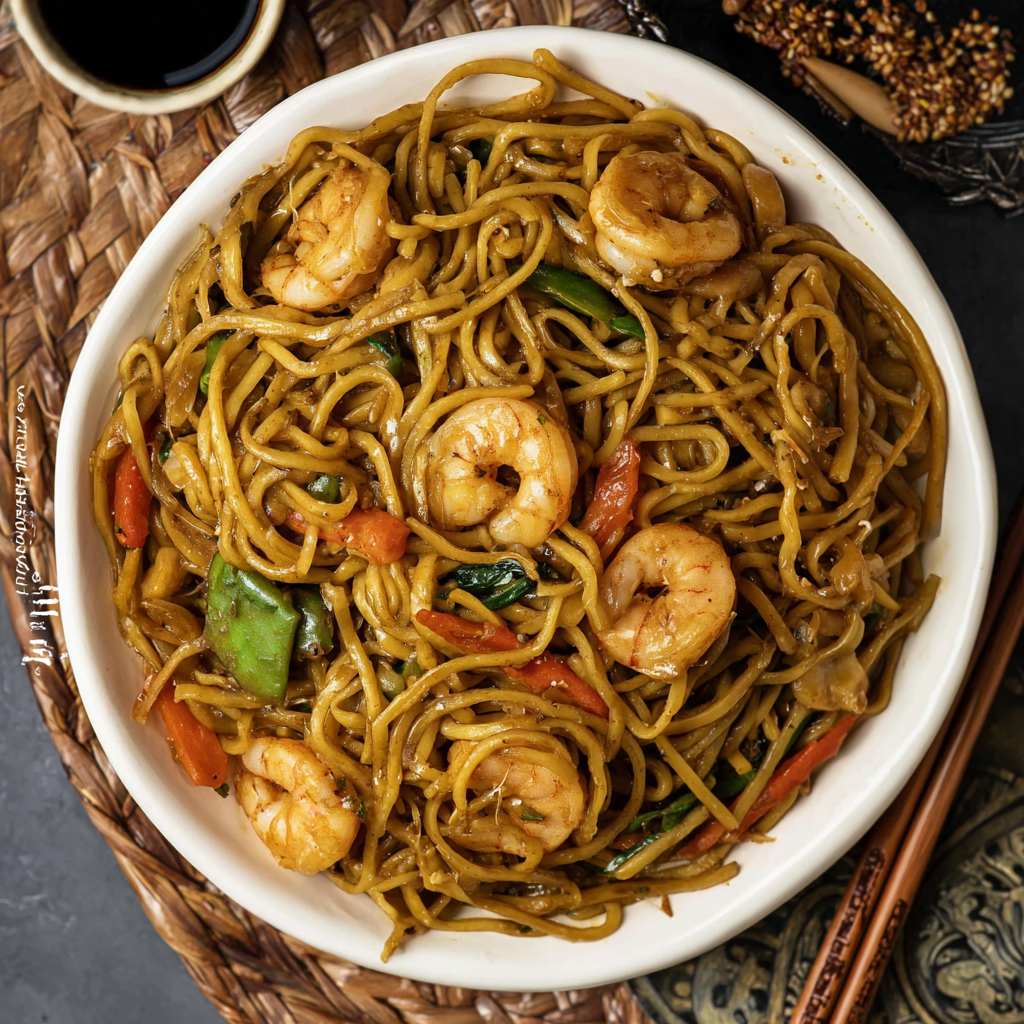
This recipe was recently updated to blanch the shrimp instead of pan-searing, making the process quicker, cleaner, and completely mess-free — without sacrificing flavor or texture.
Why You’ll Love This Recipe 🍜
- Ready in under 30 minutes
- Restaurant-quality flavor at home
- Tender, juicy shrimp every time
- Simple ingredients, big payoff
- Perfect for weeknights or meal prep
- Easy to customize with your favorite veggies
Ingredients Overview 🧄🦐
Scroll to the recipe card for exact measurements.
For the Lo Mein
- Lo mein noodles – Thick egg noodles that are chewy and yellow in color
- Vegetables – Onion, carrot, celery, napa cabbage, and green onions add color, texture, and freshness
- Garlic – Essential for that classic lo mein flavor
- Toasted sesame oil – Adds a nutty, aromatic finish
- Neutral cooking oil – For stir-frying
For the Lo Mein Sauce
- Oyster sauce – The backbone of the sauce; rich, savory, and umami-packed
- Soy sauce – Regular or low sodium both work
- Dark soy sauce – Adds depth and a rich brown color
- Sugar – Balances the savory elements
- Shaoxing cooking wine – Optional but highly recommended for authentic flavor
For the Shrimp
- Shrimp – Small or large both work
- Salt – Light seasoning
- Shaoxing cooking wine – Removes seafood odor and enhances flavor
- Cornstarch & oil – For velveting, which keeps shrimp juicy and tender
What Kind of Noodles Are Best for Lo Mein? 🍜
Lo mein is traditionally made with thick egg noodles. You’ll usually find them fresh or frozen in vacuum-sealed packages. They’re round, chewy, and yellow in color.
If available, Twin Marquis lo mein noodles are an excellent choice and closely resemble restaurant-style noodles.
How to Make Shrimp Lo Mein 👩🍳
1. Marinate the Shrimp
In a bowl, combine shrimp with cornstarch, Shaoxing wine, salt, and oil. Mix until evenly coated and set aside.
2. Make the Sauce
In a small bowl, mix together oyster sauce, soy sauce, dark soy sauce, and sugar. Set aside.
3. Blanch the Shrimp, Noodles, and Vegetables
Bring a large pot of water to a boil. Add shrimp and cook just until pink and opaque. Remove immediately and set aside.
Bring the water back to a boil and add the lo mein noodles. Cook according to package instructions.
During the last 30 seconds, add the vegetables and cook until just wilted. Drain everything well.
Tip: Use a large pot — noodles expand and release starch while cooking.
4. Stir-Fry the Garlic
Heat oil in a wok or large pan over medium-high heat. Add garlic and stir-fry for 15–30 seconds until fragrant.
5. Combine Everything
Add noodles and vegetables to the pan. Toss to combine, then drizzle in the Shaoxing wine and stir-fry briefly until fragrant.
Add shrimp and sauce. Toss everything together until evenly coated and heated through.
6. Finish and Serve
Drizzle in toasted sesame oil, add green onions, and toss for another 15–30 seconds. Serve hot and enjoy.
Recipe Tips 👌
- Don’t rinse the noodles — the starch helps the sauce cling
- Fully thaw and loosen noodles before boiling to prevent clumping
- Don’t overcook vegetables — 15–30 seconds is enough to keep them crisp and vibrant
Storage 🧊
Store leftovers in an airtight container in the refrigerator for 3–4 days. Note that noodles will soften slightly over time.
Reheating 🔥
Microwave:
Add a splash of water, cover loosely, and heat until hot, tossing halfway.
Stovetop:
Reheat in a nonstick pan with a splash of water over medium heat until warmed through.
FAQs ❓
Does shrimp lo mein usually have vegetables?
Yes. Most versions include onion, carrot, celery, napa cabbage, and green onions.
What’s the difference between lo mein and chow mein?
Lo mein uses boiled thick egg noodles, while chow mein uses thinner noodles that are fried or crisped.
What does lo mein taste like?
Savory, garlicky, slightly sweet, and rich with a hint of toasted sesame flavor.