
Homemade Egg Noodles are simple, fresh, tender, and made from scratch with just a few basic ingredients. You do not need a pasta machine or any special equipment—just flour, salt, eggs, water, your hands, a rolling pin, and a knife.
These old-fashioned egg noodles are perfect for soups, stews, casseroles, or simple buttered noodles. They cook quickly, taste fresher than store-bought pasta, and bring that classic homemade comfort to any meal.
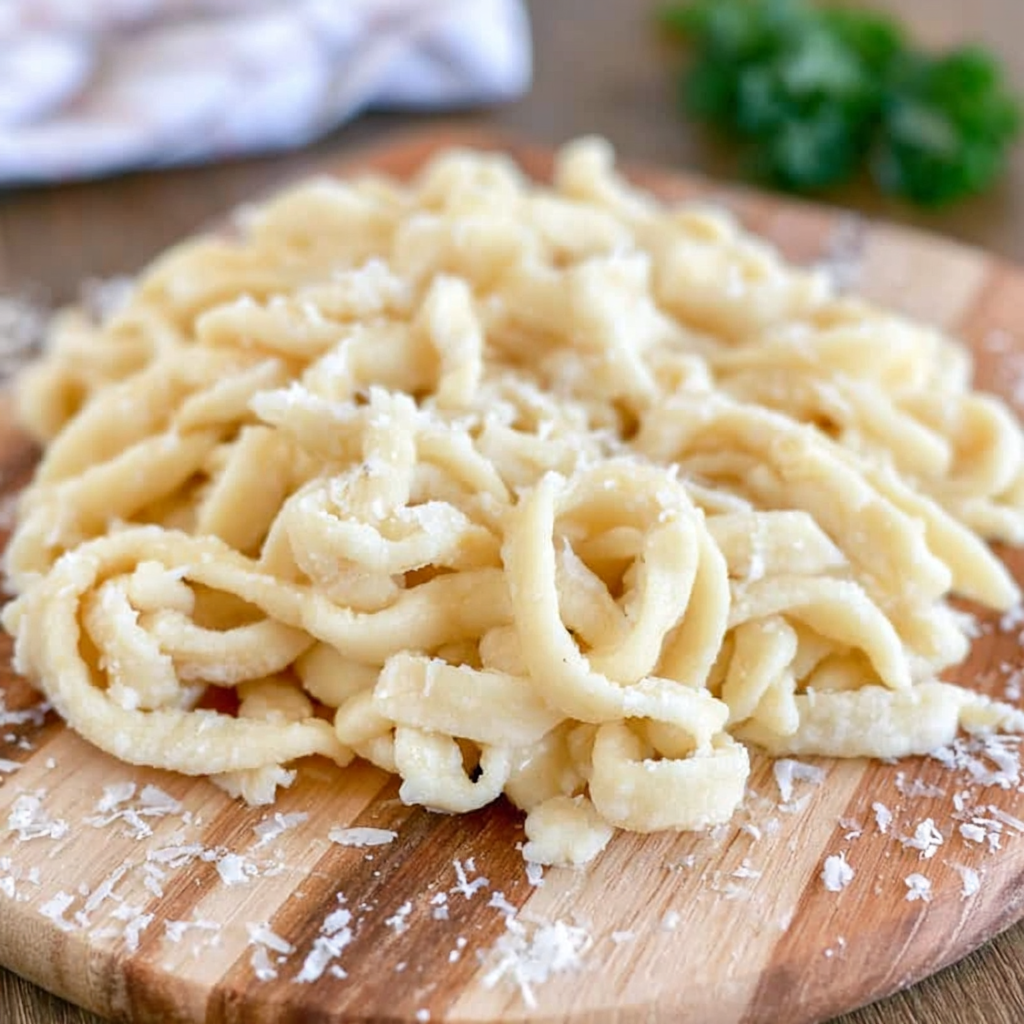
Why You’ll Love These Homemade Egg Noodles
- Made with simple pantry ingredients
- No pasta machine needed
- Ready in about 15 minutes
- Perfect for soups and stews
- Soft, tender, and fresh
- Great old-fashioned recipe
- Easy to cut into any shape or width
- Delicious with chicken soup, beef stew, or butter
What Makes Homemade Egg Noodles So Good?
Fresh egg noodles have a soft, chewy texture and rich flavor that dried store-bought noodles cannot fully match. The egg yolks make the dough tender and flavorful, while the flour gives it structure.
Because these noodles are fresh, they cook much faster than dried pasta. Drop them into boiling water or soup, and they are ready in just a few minutes.
Ingredients
- 2 cups all-purpose flour
- 2 teaspoons kosher salt
- 3 large egg yolks
- 1 large egg
- ¼ cup water
Ingredient Notes
Flour
All-purpose flour works perfectly for homemade egg noodles. It gives the noodles structure while keeping them tender.
Eggs and Egg Yolks
The egg and extra yolks add richness, color, and flavor. They also help the dough come together.
Salt
Kosher salt seasons the dough and helps the noodles taste flavorful on their own.
Water
Water is added slowly to bring the dough together. Add it 1 teaspoon at a time so the dough does not become too wet.
How to Make Homemade Egg Noodles
Step 1: Mix the Flour and Salt
Add the flour and salt to a clean work surface.
Use your fingers to mix them together.
Create a well in the center of the flour.
Step 2: Add the Eggs
Add the egg yolks and whole egg into the well.
Use your fingers to slowly work the eggs into the flour.
Mix gently until the dough starts to form.
Step 3: Add Water Slowly
Add water 1 teaspoon at a time.
Continue working the dough until it holds together.
You may not need all the water, so add it gradually.
Step 4: Knead the Dough
Knead the dough for about 10 minutes.
Press the heel of your hand into the dough, push it forward, fold it back, rotate, and repeat.
The dough should become smooth and no longer powdery.
If it feels too sticky, sprinkle in a little more flour.
Step 5: Roll the Dough
Use a rolling pin to roll the dough to your desired thickness.
For thinner noodles, roll the dough as thin as possible.
For thicker, rustic noodles, leave it slightly thicker.
Step 6: Cut the Noodles
Use a knife to cut the dough into your preferred noodle width.
You can make thin noodles, wide noodles, or rustic strips.
Gather any scraps, re-roll them, and cut again until all the dough is used.
Step 7: Cook the Noodles
Bring a pot of water or broth to a boil.
Drop the fresh noodles into the boiling liquid.
Cook for 2 to 4 minutes, depending on thickness.
Taste-test one noodle to make sure it is fully cooked.
How to Knead Egg Noodle Dough
Kneading helps develop the right texture for fresh noodles.
Use the heel of your hand to push the dough forward, then fold it back and rotate it.
Continue kneading for about 10 minutes, or until the dough is smooth and firm.
If the dough looks dry and powdery, add a tiny bit more water.
If it feels wet or sticky, dust it with a little flour.
How Thick Should Egg Noodles Be?
This depends on how you plan to use them.
For soup, roll the noodles fairly thin because they will cook quickly and soften in the broth.
For stews or casseroles, slightly thicker noodles work well because they hold their shape.
The thinner you roll the dough, the faster the noodles will cook.
Tips for the Best Homemade Egg Noodles
Add Water Slowly
Do not pour all the water in at once. Add it little by little until the dough holds together.
Knead Well
A good knead gives the noodles better texture.
Don’t Worry About Perfect Shapes
Homemade noodles are meant to look rustic.
Cook Fresh Noodles Quickly
Fresh pasta cooks much faster than dried pasta.
Test Before Draining
Cooking time depends on noodle thickness, so taste one before removing them from the pot.
Ways to Use Homemade Egg Noodles
These noodles are delicious in:
- Chicken noodle soup
- Turkey noodle soup
- Beef stew
- Chicken and noodles
- Creamy chicken pasta
- Buttered noodles
- Casseroles
- Brothy vegetable soups
- Homemade noodle bowls
Can You Dry Homemade Egg Noodles?
Yes. If you are not using the noodles right away, let them dry for a couple of hours.
Spread them out in a single layer so they do not stick together.
Once dried, store them in an airtight container in a cool place for up to 1 week.
Storage Instructions
Fresh uncooked noodles can be used right away or dried before storing.
If storing short-term, place the noodles in an airtight container and refrigerate for up to 2 days.
For longer storage, let them dry fully and keep them in an airtight container in a cool place for up to 1 week.
Freezing Instructions
You can freeze homemade egg noodles.
Place the cut noodles on a baking sheet and freeze until firm.
Transfer to a freezer-safe bag or container.
Freeze for up to 2 months.
Cook from frozen in boiling water or broth, adding an extra minute or two if needed.
Frequently Asked Questions
Do I Need a Pasta Machine?
No. You can make these noodles with only your hands, a rolling pin, and a knife.
Can I Use a Mixer?
Yes. You can use a stand mixer with a dough hook, but making the dough by hand works very well.
Why Is My Dough Too Sticky?
It may have too much water. Add a little flour, one small sprinkle at a time.
Why Is My Dough Too Dry?
Add water 1 teaspoon at a time until the dough holds together.
How Long Do Homemade Egg Noodles Cook?
Fresh egg noodles usually cook in 2 to 4 minutes, depending on thickness.
Recipe Information
Prep Time: 10 minutes
Cook Time: 5 minutes
Total Time: 15 minutes
Servings: About 4
Final Thoughts
Homemade Egg Noodles are simple, comforting, and surprisingly easy to make. With just a few ingredients and no special equipment, you can prepare fresh noodles that taste wonderful in soups, stews, casseroles, or with a little butter.
Once you try making egg noodles from scratch, you may never look at store-bought noodles the same way again.