
If you’re craving a comforting Korean rice bowl that’s flavorful, customizable, and surprisingly easy to make, this easy bibimbap with ground beef is exactly what you need. Packed with colorful vegetables, savory beef, fluffy rice, and a sweet-spicy gochujang sauce, this dish delivers restaurant-style flavor without complicated prep.
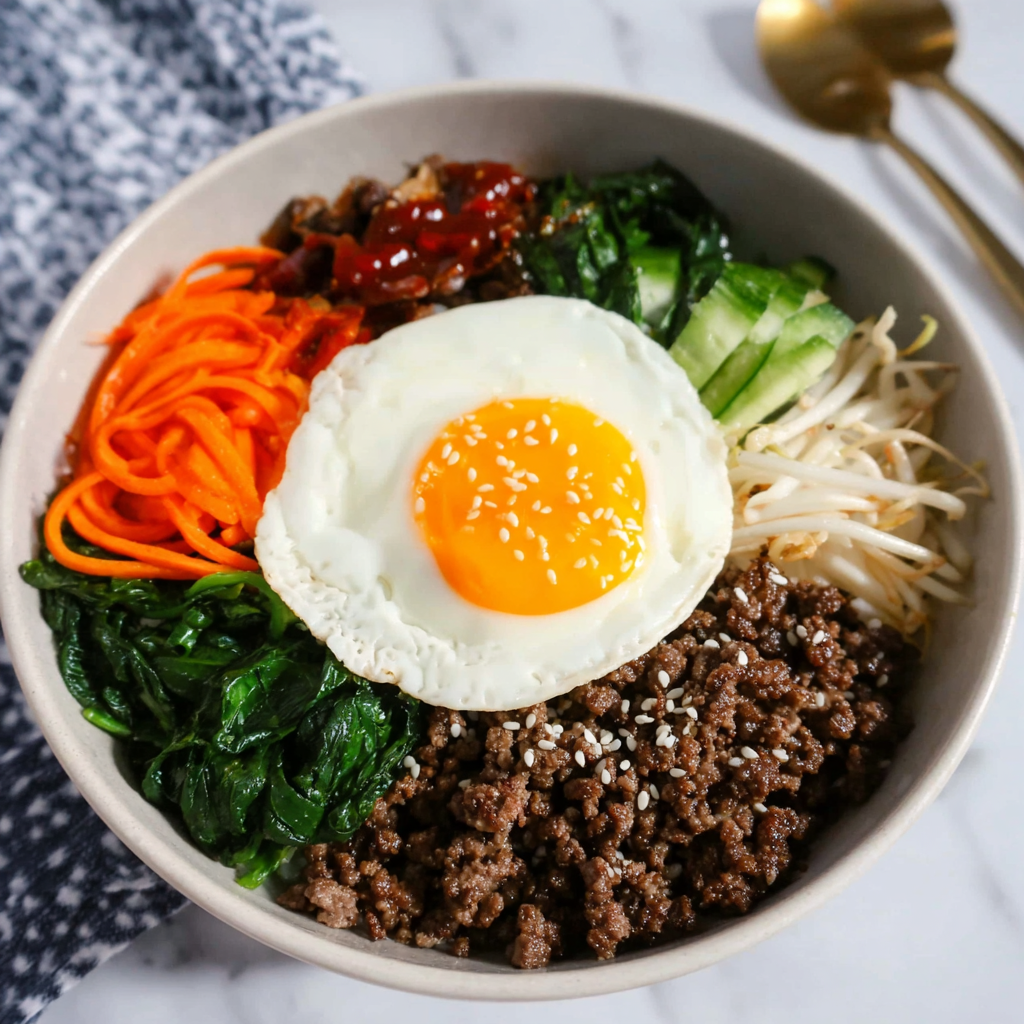
Traditional bibimbap often involves marinating beef and preparing multiple side dishes, but this simplified version uses ground beef to save time—no marinating needed, yet still incredibly delicious. It’s the perfect weeknight meal when you want something hearty, nourishing, and fun to mix together.
What Is Bibimbap?
Bibimbap literally means “mixed rice” in Korean. It’s a classic Korean dish made with warm rice topped with seasoned vegetables (called namul), meat (usually beef), a fried egg, and a bold gochujang-based sauce.
In Korean households, bibimbap is famously known as a “clean-out-the-fridge” meal. Leftover side dishes and vegetables are often repurposed into one satisfying bowl, reducing food waste while creating something delicious. This flexibility is exactly what makes bibimbap so beloved.
Why You’ll Love This Ground Beef Bibimbap
- No marinating required – ground beef cooks quickly and absorbs flavor easily
- Customizable – swap vegetables based on what you have
- Balanced & filling – protein, veggies, rice, and healthy fats in one bowl
- Great for meal prep – most components can be made ahead
- Authentic flavors, simplified – perfect for home cooks
Popular Bibimbap Topping Ideas
While this recipe includes classic toppings, bibimbap is endlessly adaptable. Feel free to mix and match:
- Seasoned bean sprouts (mung or soybean)
- Blanched spinach
- Sautéed carrots, mushrooms, zucchini, or corn
- Kimchi (any variety)
- Fresh vegetables like lettuce or cabbage
- Marinated beef, ground beef, tofu, or eggs
Ingredients Overview
(Exact measurements can be found in the recipe card below)
Base & Toppings
- Cooked white rice (or brown/mixed grain rice)
- Ground beef (80/20 for best flavor)
- Carrots, mushrooms, spinach, bean sprouts
- Eggs (fried, sunny-side up)
Bibimbap Sauce
- Gochujang (Korean red chili paste)
- Honey or sugar
- Garlic
- Toasted sesame oil
Seasonings & Garnish
- Soy sauce (low sodium)
- Salt
- Sesame oil
- Green onions & sesame seeds (optional)
How to Make Easy Bibimbap with Ground Beef
1. Make the Bibimbap Sauce
In a small bowl, mix together gochujang, honey, minced garlic, and toasted sesame oil. Set aside.
2. Prepare the Vegetables
Bean Sprouts
Blanch in boiling water for 1–2 minutes until translucent. Rinse with cold water, squeeze out excess moisture, then season with salt and sesame oil.
Spinach
Blanch for 15–30 seconds until just wilted and bright green. Cool, squeeze gently, and season with salt and sesame oil.
Mushrooms & Carrots
Sauté separately in oil over medium-high heat. Lightly season with salt and finish with a drizzle of sesame oil.
💡 Tip: Avoid overcooking—vegetables should stay vibrant and slightly crisp.
3. Cook the Ground Beef
In a pan over medium heat, cook the ground beef until no longer pink. Drain excess fat if needed.
Add soy sauce, honey, garlic, and sesame oil. Simmer for about 5 minutes until the sauce slightly reduces and coats the beef.
4. Fry the Eggs
Heat oil in a pan until just smoking. Fry eggs sunny-side up until whites are set and edges are crisp while the yolk stays runny.
5. Assemble the Bibimbap
Add hot rice to a bowl. Arrange the vegetables and ground beef around the rice. Place the fried egg on top. Garnish with green onions and sesame seeds.
Add bibimbap sauce to taste, mix everything together, and enjoy!
What to Serve with Bibimbap
Bibimbap is a complete meal on its own, but it pairs beautifully with:
- Kimchi (napa cabbage or fresh kimchi)
- Quick cucumber kimchi or cucumber salad
- Light Korean soups
- Refreshing drinks like barley tea or fruit-based beverages
Recipe Tips for Best Results
- Don’t over-squeeze vegetables—remove moisture without crushing them
- Keep some sauce with the beef so it stays juicy
- Gochujang spice levels vary—start small and adjust
- Prepare components ahead for easy meal prep
- Have fun customizing—there’s no wrong way to make bibimbap
Storage & Reheating
- Fridge: Store leftovers up to 3 days
- Toppings: Keep vegetables and beef in separate containers (4–5 days)
- Eggs: Best cooked fresh
- Reheating: Microwave mixed bibimbap or reheat components separately
Frequently Asked Questions
Do you eat bibimbap hot or cold?
Bibimbap is best enjoyed warm. The rice, beef, and egg should be hot, while some vegetables can be cool.
Can I make it vegetarian?
Absolutely! Skip the beef and egg or substitute tofu or mushrooms.
What rice is best for bibimbap?
White rice is traditional, but brown rice or Korean purple rice works well too.
What does bibimbap sauce taste like?
Sweet, savory, slightly spicy, and nutty—thanks to gochujang, garlic, honey, and sesame oil.
Final Thoughts
This easy ground beef bibimbap proves that you don’t need complicated techniques to enjoy authentic Korean flavors at home. It’s colorful, nourishing, customizable, and incredibly satisfying—perfect for busy weeknights or relaxed weekend meals.
Once you try it, you’ll see why bibimbap is loved worldwide. Mix, eat, and enjoy every bite!