
This Arabic Chopped Salad is bright, fresh, and packed with flavor. Known simply as salatah (سلطة) in many Levant households, this classic salad is served alongside countless Middle Eastern dishes. It pairs beautifully with hearty meals like maqluba or kabsa, balancing rich flavors with crisp, refreshing vegetables.
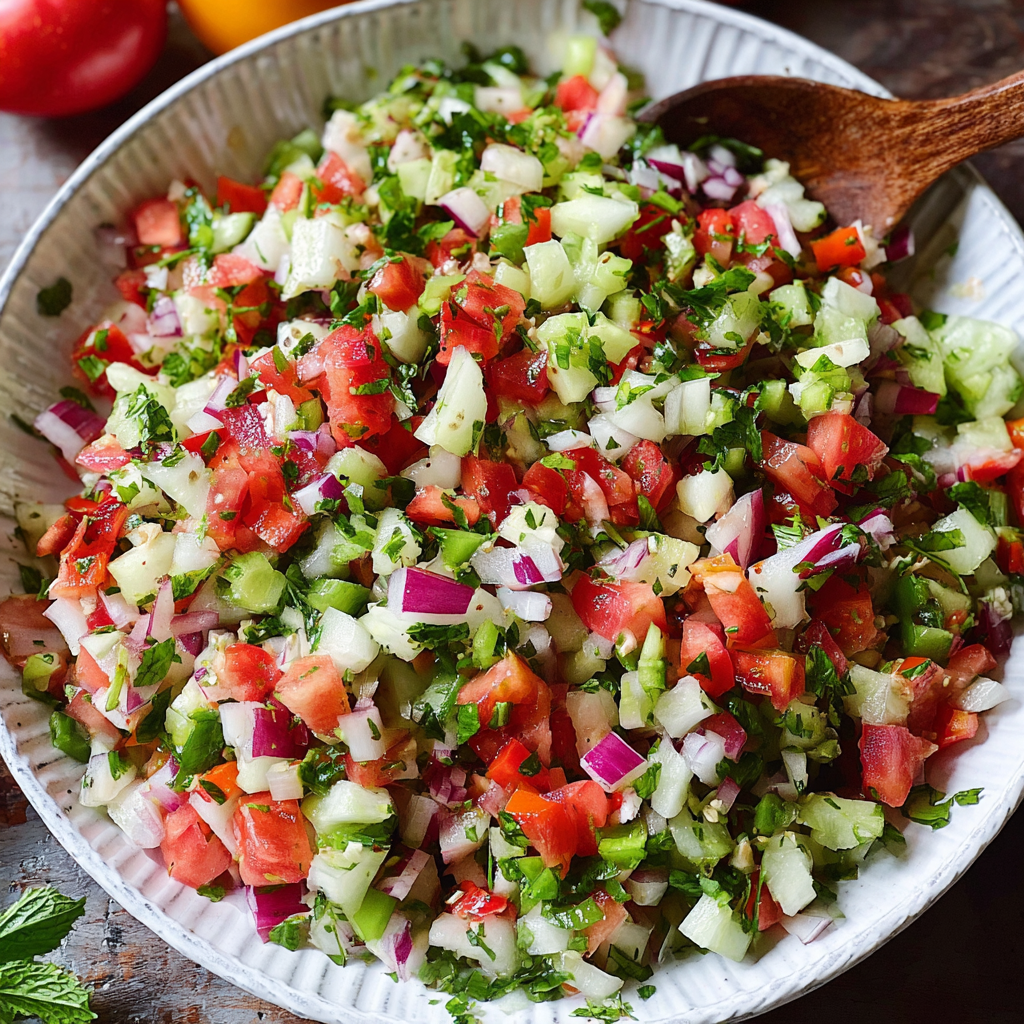
If you love simple recipes that highlight fresh produce, this one is a must-try — especially during summer when cucumbers, tomatoes, and parsley are at their peak.
A Staple of Middle Eastern Meals
Across the Levant region — including Lebanon, Syria, Jordan, Palestine, and Iraq — chopped vegetable salad is served with most main courses. Middle Eastern dishes are often deeply spiced and slow-cooked, so a light, lemony salad brings contrast and freshness to the table.
While traditional Arabic meals can take hours to prepare, this salad is simple. The only time investment? A bit of careful chopping. For quicker prep, a vegetable chopper works wonders and keeps everything evenly diced.
What Is the Most Popular Salad in the Middle East?
In many Levantine homes, the most common salad is simply called salatah (سلطة), meaning “salad.” It typically includes:
- Cucumbers
- Tomatoes
- Fresh parsley
- Olive oil
- Lemon juice
Some families also add radishes, bell peppers, or onions for extra flavor and crunch.
Other Popular Arabic Salads
The Middle East is home to many fresh, vibrant salads. A few well-loved favorites include:
- Fattoush – A mixed vegetable salad topped with toasted or fried pieces of flatbread for added crunch.
- Tabbouleh – A parsley-forward salad made with bulgur, tomatoes, cucumber, and green onions.
Today’s recipe is the simpler everyday chopped salad that accompanies most traditional meals.
Is Arabic Chopped Salad Healthy?
Absolutely! This salad is naturally nutrient-dense and filled with fiber, vitamins, and heart-healthy fats.
Ingredient Highlights:
- Cucumbers – Hydrating and rich in vitamin K and potassium
- Tomatoes – Packed with vitamin C and lycopene
- Red bell pepper – High in antioxidants and vitamin A
- Radishes – Great source of fiber and vitamin C
- Parsley – Loaded with vitamins A, C, and K
- Green onions – Provide fiber and vitamin C
- Olive oil – Contains heart-healthy monounsaturated fats
- Lemon juice – Boosts vitamin C and brightness
Fun fact: Parsley is considered a natural chelator, meaning it may help bind certain heavy metals. For best quality, choose fresh, organic parsley when possible.
Tips for the Best Arabic Chopped Salad
- Dice everything small. The signature texture of this salad comes from finely chopped vegetables.
- Use the freshest produce possible. Summer ingredients bring the best flavor.
- Salt properly. Salt and black pepper enhance the natural sweetness of the vegetables.
- Serve fresh. This salad is best enjoyed the day it’s made. Over time, the vegetables release water and soften.
Ingredients
- 2 large cucumbers
- 2 vine tomatoes (or 3 Roma tomatoes)
- 1 red bell pepper
- 4 radishes
- 1 bunch fresh parsley
- 2 green onions
- 3 tablespoons olive oil
- Juice of 1 fresh lemon
- 1 teaspoon sea salt
- ½ teaspoon black pepper
Optional: A pinch of sumac for a slightly tangy, citrusy flavor.
How to Make Arabic Chopped Salad
- Prepare the cucumbers: Peel, remove seeds, and finely dice. Add to a large bowl.
- Dice the tomatoes: Remove the core and chop finely. Add to the bowl.
- Chop the bell pepper: Remove seeds and white membranes, then finely dice.
- Slice the radishes: Trim ends and chop very small.
- Add parsley: Finely chop the leaves (a little stem is fine — it adds flavor).
- Slice green onions: Chop up to the white part and add to the bowl.
- Dress the salad: Drizzle olive oil and lemon juice over the vegetables. Add salt and black pepper.
- Toss well and serve immediately.
Frequently Asked Questions
What tomatoes work best?
Vine-ripened tomatoes or Roma tomatoes both work well. Use whichever is freshest.
Can I add sumac?
Yes! Sumac adds a pleasant tart flavor. Start with a small amount and adjust to taste.
What is traditional Arabic salad dressing?
Just olive oil and fresh lemon juice — simple and classic.
Fresh, crisp, and incredibly versatile, Arabic Chopped Salad is the perfect companion to grilled meats, rice dishes, and hearty stews. It’s simple, wholesome, and proof that sometimes the most basic recipes are the most delicious.